
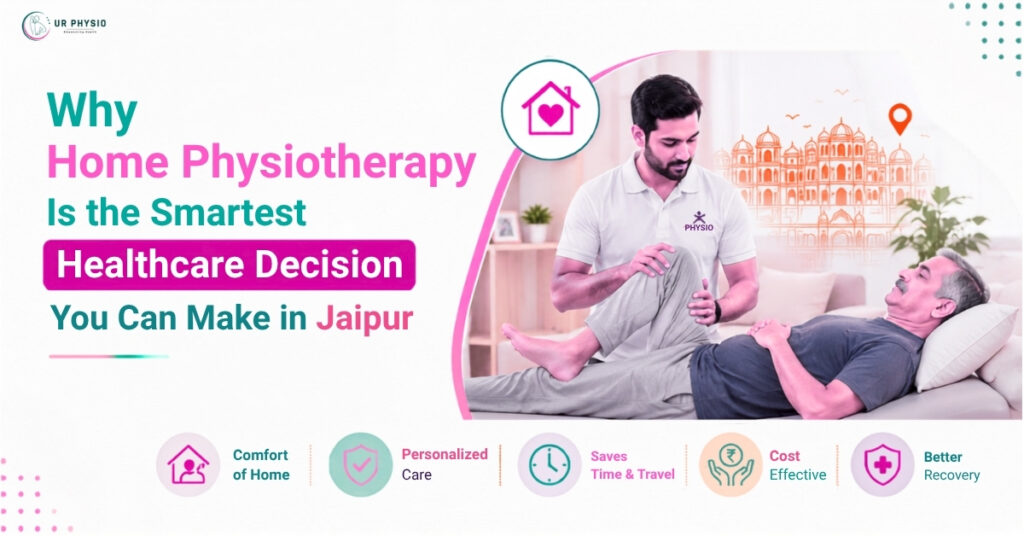
There is a moment many families in Jaipur know too well. A parent who just had knee replacement surgery. An elderly grandparent struggling to get out of bed. A stroke patient who needs daily rehabilitation but cannot bear the discomfort of a long rickshaw ride to the clinic. The question that follows is always the same — how do we get them the care they need, without putting them through more pain?
The answer, increasingly, is home physiotherapy.
This is not a shortcut or a compromise. For a large category of patients — the elderly, the post-surgical, the bedridden, those recovering from neurological conditions — receiving physiotherapy treatments at home is often more effective, more comfortable, and more consistent than clinic visits. And in a city like Jaipur, where traffic, heat, and distances can turn a simple commute into an ordeal, bringing the therapist to the patient simply makes good sense.
What Is Home Physiotherapy, and How Is It Different?
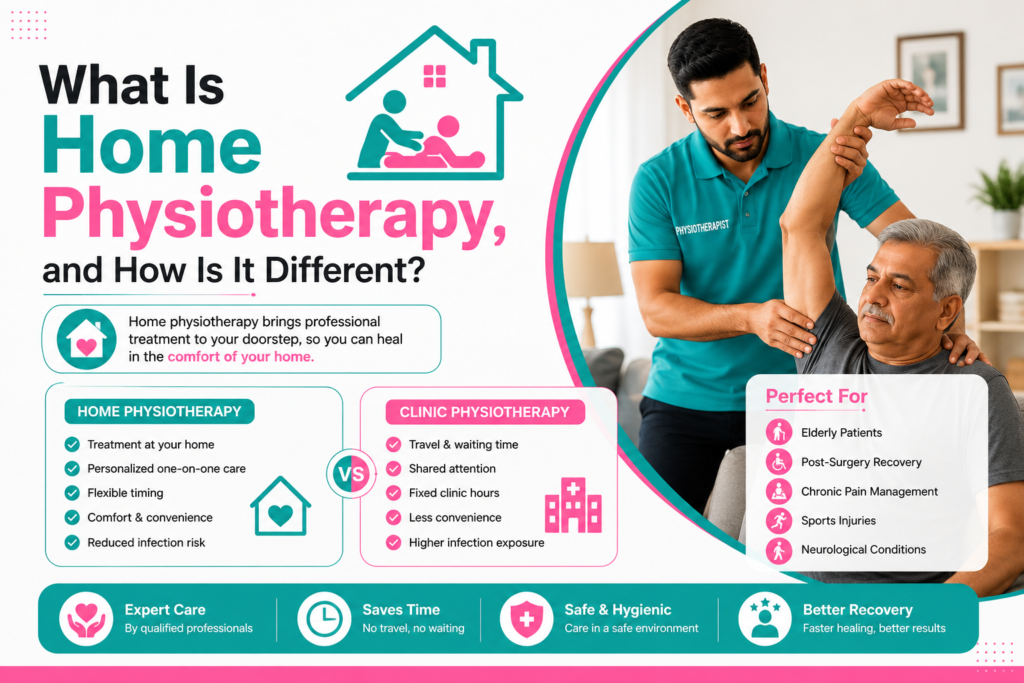
Home physiotherapy is a professional physiotherapy service delivered in the patient’s own living space — their bedroom, living room, or wherever they are most comfortable. A qualified physiotherapist arrives with portable equipment, conducts a full clinical assessment, and provides treatment that is identical in quality to what you would receive inside a clinic.
The difference is not in the quality of care. It is in where that care happens.
At a clinic, a patient must dress, travel, wait, receive treatment for 30–45 minutes, and then travel back — often while in pain, often exhausted. For a 70-year-old with severe arthritis or someone three weeks post knee replacement, that journey alone can undo the benefit of the session.
At home, the same patient lies comfortably in their own bed. They receive a longer, more focused session of 45–60 minutes. Their family is present. There is no travel fatigue. The exercises they are taught can be immediately practiced in the actual space they live in. Recovery, quite simply, happens faster.
Who Truly Benefits from Physiotherapy at Home in Murlipura and Across Jaipur?
One of the biggest misconceptions about home physio is that it is only for the very sick. In reality, a wide range of patients benefit significantly from receiving care at home.
Elderly Patients
Ageing brings with it weakened joints, reduced balance, arthritis, and a general slowing of the body’s recovery mechanisms. For senior citizens, travelling to a physiotherapy clinic multiple times a week can itself become a health hazard. Receiving home physiotherapy means they get consistent, regular care without the exhaustion and risk of falls associated with going out. Therapists can also assess the actual home environment and suggest changes that reduce fall risk — something no clinic visit can offer.
Post-Surgery Patients
After a knee replacement, hip replacement, or fracture surgery, the early weeks of rehabilitation are critical. Research consistently shows that early, guided movement significantly improves long-term outcomes. But pushing a freshly operated patient to commute to a clinic during this fragile window is risky. Home-based rehabilitation means the patient starts physiotherapy treatments earlier, recovers faster, and is never exposed to the strain of travel while healing tissue is still vulnerable.
Stroke and Paralysis Patients
Neurological rehabilitation requires something that clinic schedules often cannot provide — consistency, frequency, and a stable environment. Post-stroke patients respond best when therapy is delivered regularly, in a familiar setting. Home physiotherapy for stroke recovery allows the patient to focus entirely on getting better, while family members are taught supportive techniques that extend the benefit of each session.
Bedridden Patients
Long-term bed rest creates its own secondary complications — muscle wasting, joint contractures, pressure sores, and a general physical and mental decline. A physiotherapist visiting the home can address these issues with passive movement, positioning techniques, and targeted exercises that keep the body functioning even when the patient cannot move independently.
Pregnant and Postnatal Women
Pregnancy-related back pain, pelvic girdle pain, and postpartum recovery are conditions where many women feel hesitant about visiting a clinic. Access to a qualified home physiotherapy expert — especially a female physiotherapist — in the comfort of home makes all the difference in whether a woman seeks the care she genuinely needs.
Busy Working Professionals
Chronic neck pain, desk-related back issues, posture problems — these conditions rarely receive timely attention because people struggle to fit clinic appointments into their work schedules. Home visits, available in early morning or evening slots, make it genuinely possible to be consistent with treatment.
The Physiotherapy Treatments Delivered at Home — What to Expect
A common concern from first-time patients is whether home physiotherapy can match the clinical environment in terms of actual treatment quality. The short answer is yes — with a few thoughtful adaptations.
A trained home physiotherapy expert arrives equipped with:
TENS (Transcutaneous Electrical Nerve Stimulation): A portable unit that delivers gentle electrical impulses to relieve acute and chronic pain — widely used for back pain, knee pain, and nerve-related conditions.
IFT (Interferential Therapy): A more penetrating electrotherapy modality that reaches deeper tissues to reduce inflammation and muscle spasm. It is particularly effective in post-surgical care and arthritis management.
Ultrasound Therapy: Used to treat soft tissue injuries, frozen shoulder, and sports-related damage by promoting healing at a cellular level through sound wave energy.
Manual Therapy and Massage: Skilled hands-on techniques that release tight muscles, improve joint mobility, and reduce pain — no machine required, just expert training and experience.
Therapeutic Exercise: Personalised exercise programmes designed for the patient’s specific condition, taught step by step in the home environment they will actually practice in.
Conditions that respond very well to home-based physiotherapy treatments include back pain, sciatica, cervical pain, knee pain, frozen shoulder, arthritis, Bell’s palsy, post-stroke motor deficits, paralysis rehabilitation, post-fracture recovery, and prevention of bedsores in bedridden patients.
Physiotherapy at Home in Murlipura — Why Local Matters
If you are searching for physiotherapy at home in Murlipura or the wider northern areas of Jaipur — Vidhyadhar Nagar, Sikar Road, Harmada, Govindpura, Jhotwara, Devdhara Colony — the advantage of choosing a local specialist cannot be overstated.
A therapist who is based nearby arrives faster, visits more consistently, and can respond quickly if the patient’s condition changes. There is no travel delay eating into treatment time. And for elderly patients especially, the reassurance of a familiar face arriving regularly at a predictable time makes an enormous psychological difference to recovery.
UR Physio Clinic, led by Dr. Suman Choudhary, has built its home physiotherapy service specifically around the communities of Murlipura and northern Jaipur. This is not a national aggregator sending random therapists from a different part of the city. It is a locally rooted clinic with deep familiarity with the area, its patients, and their specific needs.
For families who specifically need a lady physiotherapist for elderly female patients, post-natal care, or reasons of personal comfort, this is an important factor. Dr. Suman Choudhary’s practice offers that choice with no compromise in clinical expertise.
What Makes a Good Home Physiotherapy Expert — What to Look For
Not every therapist who offers home visits delivers the same standard of care. Before booking anyone for your family, it is worth asking the right questions.
Qualifications: Your physiotherapist should hold a BPT (Bachelor of Physiotherapy) degree at minimum, issued by a recognised Indian university. Post-graduate specialisation (MPT) in relevant areas like orthopedics, neurology, or sports rehabilitation is an additional advantage.
Clinical Assessment First: A good home physiotherapy expert does not begin treatment at the first visit. They begin with a thorough assessment — reviewing medical history, understanding the current condition, and creating a personalised treatment plan. Be cautious of anyone who skips straight to treatment without this step.
Portable Equipment: Professional home physiotherapy requires proper tools. A therapist arriving without a TENS unit, IFT machine, or at least the core essentials is offering something less than full treatment.
Progress Tracking: Treatment should not feel static. A good physiotherapist revisits and adjusts the plan at each session based on observable progress.
Family Education: One of the biggest advantages of home physio is the opportunity to teach family members supportive exercises and positioning techniques that extend the benefit of sessions. A therapist who does not involve the family is leaving significant recovery potential on the table.
How Frequently Should You Schedule Home Physiotherapy Sessions?
This is one of the most common questions families ask, and the honest answer is: it depends on the condition.
For acute post-surgical patients or those in active stroke rehabilitation, daily sessions or every-other-day visits in the early weeks are common and genuinely valuable. For chronic conditions like arthritis management, cervical pain, or general mobility maintenance in the elderly, two to three sessions per week is typically sufficient to see meaningful improvement.
The first session always includes a detailed assessment, after which the therapist recommends a realistic schedule based on the patient’s specific needs, their rate of progress, and practical family considerations. A trustworthy clinic will never push for more sessions than are genuinely needed.
The Role of Family in Home Physiotherapy Recovery
One aspect that makes home physiotherapy truly unique is what happens between the therapist’s visits.
In a clinic, the patient goes home and waits for the next appointment. At home, the therapist teaches family members the prescribed exercises, shows them how to assist the patient safely during movement, and explains warning signs to watch for. This active participation shortens recovery time significantly.
For a parent recovering from a hip replacement or a grandparent post-stroke, knowing that a trained family member is supporting their exercises daily — not just when the therapist visits — can mean the difference between a six-month recovery and a three-month one.
Is Home Physiotherapy the Right Choice for Your Family in Jaipur?
If you are caring for someone who fits any of the descriptions above — elderly, post-surgical, bedridden, recovering from a neurological condition, pregnant, or simply unable to travel regularly — then yes, home physiotherapy is worth serious consideration.
It is not the right choice for every situation. Patients who are mobile, live close to a clinic, and can travel comfortably may benefit from the more comprehensive equipment setup of a full clinic environment. But for the very large number of Jaipur families where that is not the situation, home-based care offers something clinics cannot: expert treatment delivered in the place where the patient actually lives, heals, and recovers.
UR Physio Clinic at Murlipura offers consultations, home assessments, and flexible booking with most visits schedulable within 24–48 hours. If you are weighing whether this is the right step for a family member, a single phone call is enough to get clear, honest guidance on what is actually needed.
FAQs About Home Physiotherapy in Jaipur
Q1. What is the cost of home physiotherapy in Jaipur?
Fees vary by condition, treatment type, and distance. Call +91 7878004780 for current pricing.
Q2. How is home physiotherapy different from a clinic visit?
The therapist comes to you with portable equipment. Sessions are longer, family can participate, and there’s zero travel stress for the patient.
Q3. Which conditions can be treated at home?
Back pain, knee pain, sciatica, arthritis, frozen shoulder, stroke recovery, paralysis, post-surgery rehab, Bell’s palsy, and more.
Q4. Is a female physiotherapist available for home visits?
Yes. Dr. Suman Choudhary is a qualified lady physiotherapist and personally conducts home visits across Jaipur.
Q5. How quickly can I book a home visit in Murlipura?
Most visits are scheduled within 24–48 hours. Call or WhatsApp +91 7878004780 to confirm your area and book.